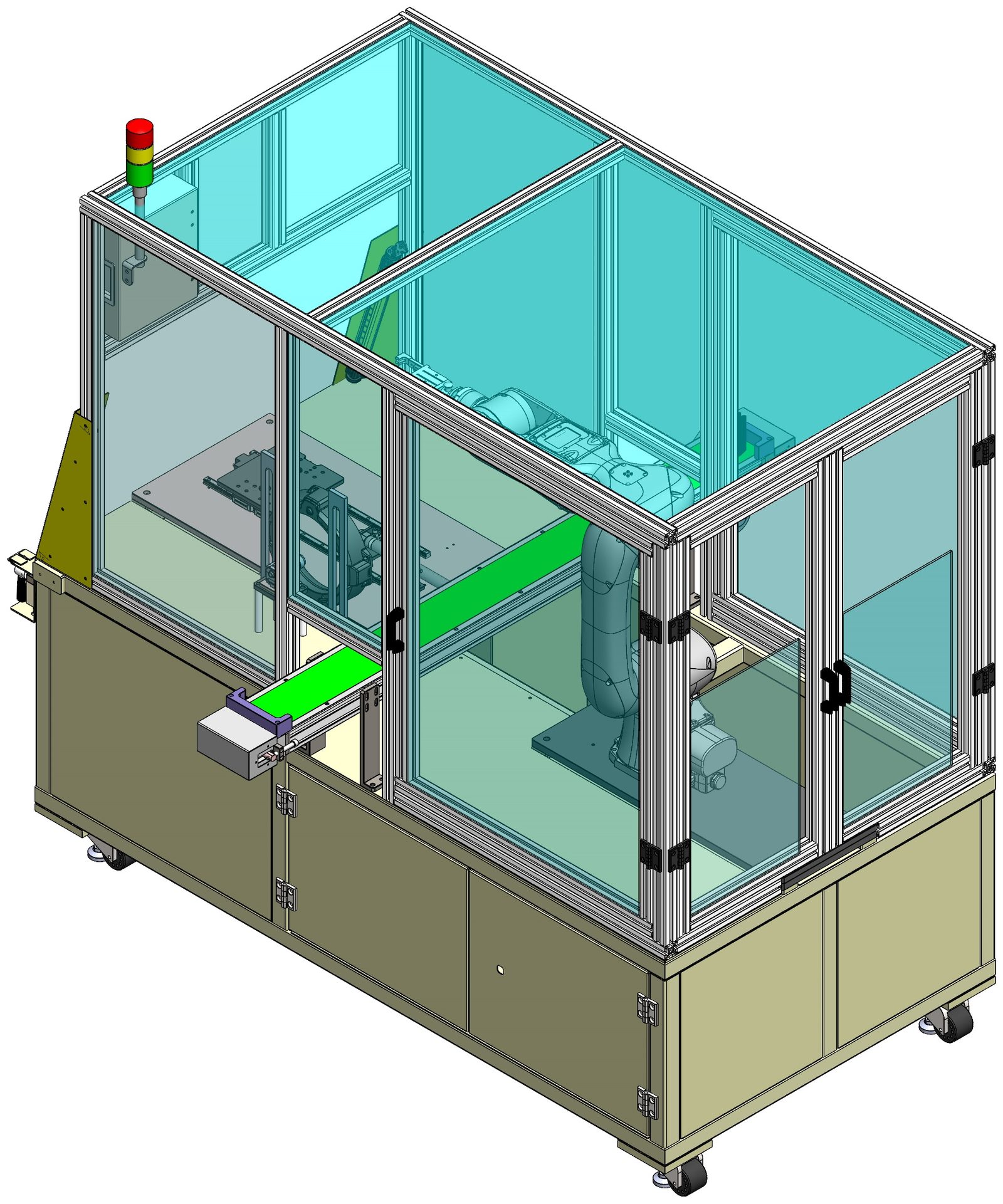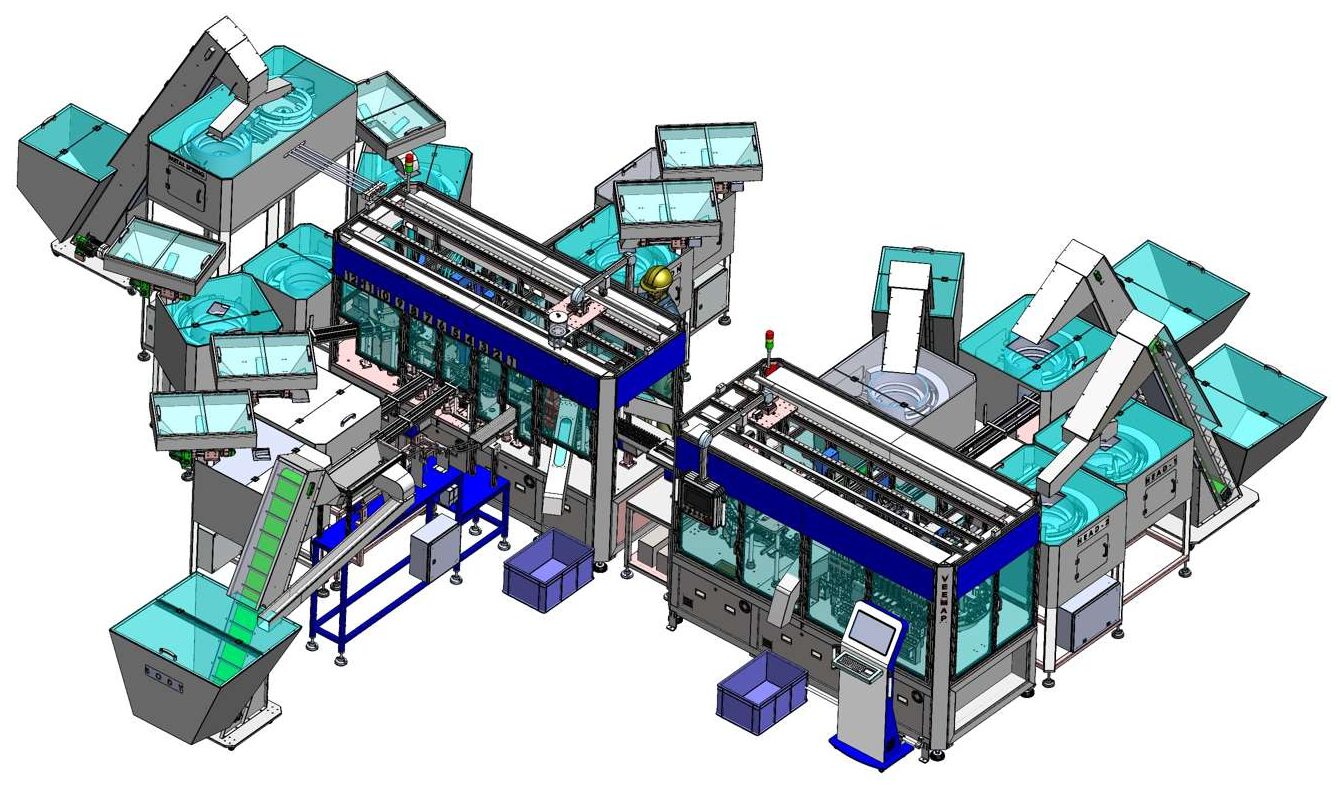
Endotracheal tube assembly
Multi-component assembly with in-line verification.
Quality-critical medical products are assembled from small components at high volume, and every unit has to be proven rather than sampled.
VEEMAP engineers product-specific automation for medical device and pharmaceutical assembly: feeding, orientation, joining, testing, inspection and traceability designed around one product and its variants.
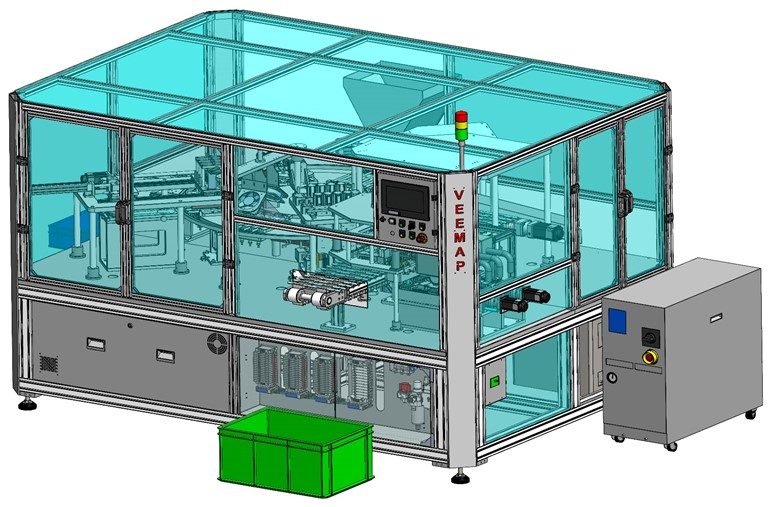
Multi-component assembly with in-line verification.
Component feeding, joining and leak verification.
Precision handling and assembly of fine components.
Multi-part device assembly with functional test.
Orientation-critical assembly with flow verification.
Small-component assembly with functional checking.
Device assembly where the product terminology is supported by the source record.
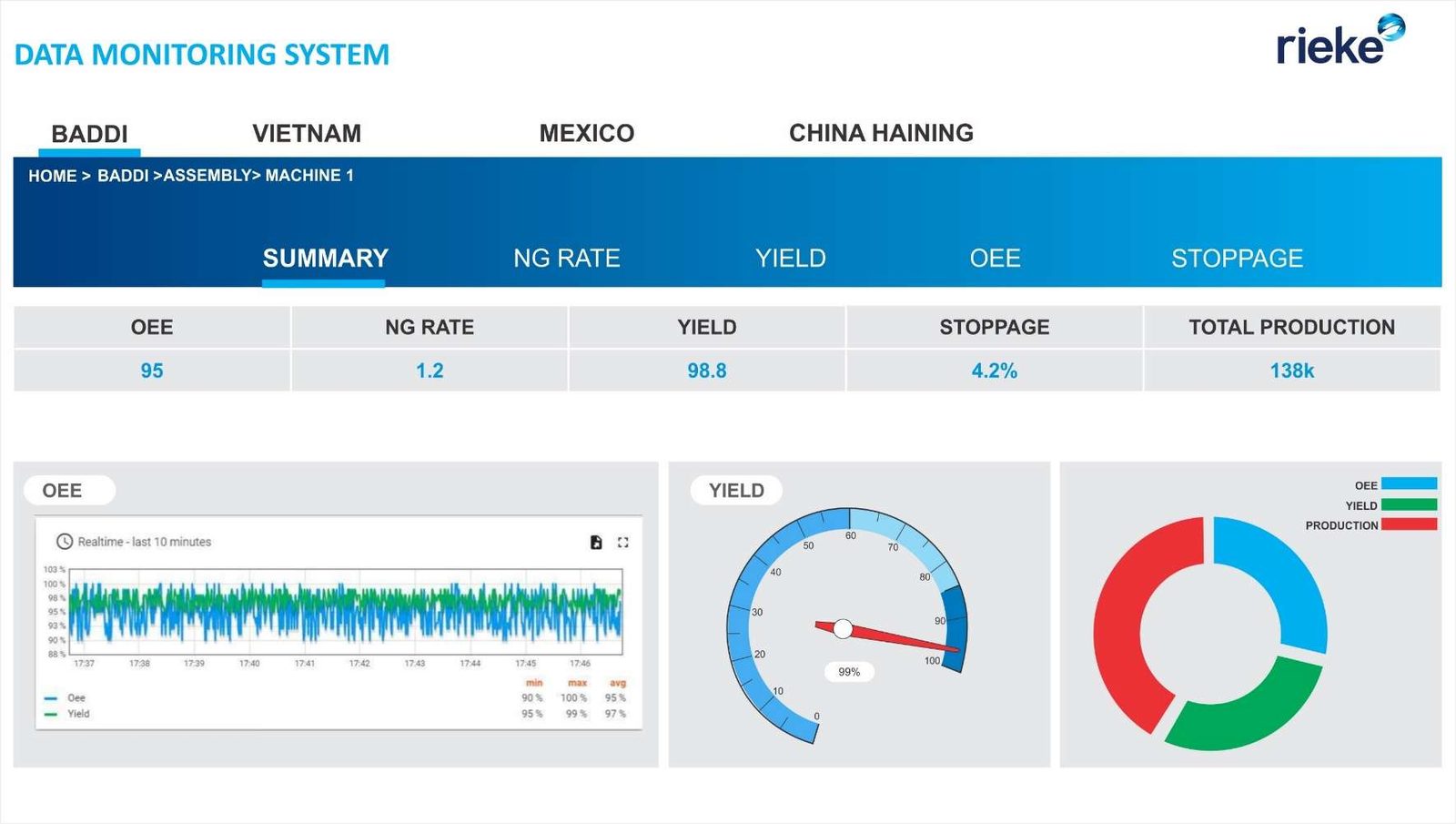
A machine that assembles a quality-critical device should be able to say what it is doing. Production state, counts, inspection results and station health are collected at the machine and presented in a VEEMAP-built dashboard rather than left on a controller screen.
Line state
Running
Nominal cycle
Good count
18,420
Units this shift
Rejects segregated
212
Removed in line
Inspection result
98.9
Per cent passing first time
Output trend across the shift
Station health
FeedOrientAssembleJoinTestInspect
Illustrative data. These values are authored to show what a VEEMAP production dashboard reports — line state, good and reject counts, first-time inspection pass rate, output trend and per-station health. They are not measurements from a delivered system and are not a performance claim. A dashboard built for a real line reports the same categories against that line’s own data, under the plant’s firewall policy.
Tell us the device, the assembly steps, what has to be verified before a part moves on, how many variants you run, and where you are in the project.